What Is PC Strand? Manufacturing Process, Properties, and Uses.
Introduction
PC Strand (Prestressed Concrete Strand) is a high-strength steel product engineered for use in prestressed concrete systems. It allows concrete structures to resist high tensile stresses, achieve longer spans, and carry heavier loads while improving durability and controlling cracking. By introducing compressive forces into concrete, PC Strand enhances structural efficiency and long-term performance across a wide range of applications.
As infrastructure and urban development projects worldwide continue to demand optimized material use and extended service life, prestressed concrete systems utilizing PC Strand have become a widely adopted solution. This article presents an engineering-focused overview of PC Strand, explaining its fundamental characteristics, manufacturing process, material properties, applicable standards, and primary applications in modern construction.
What Is PC Strand?
PC Strand is a cold-drawn, high-carbon steel product designed to introduce tensile force into concrete elements through prestressing. The most common configuration is the seven-wire strand, consisting of one straight central wire surrounded by six helically wrapped outer wires. This geometry provides balanced load distribution, high tensile capacity, and stable anchorage performance.
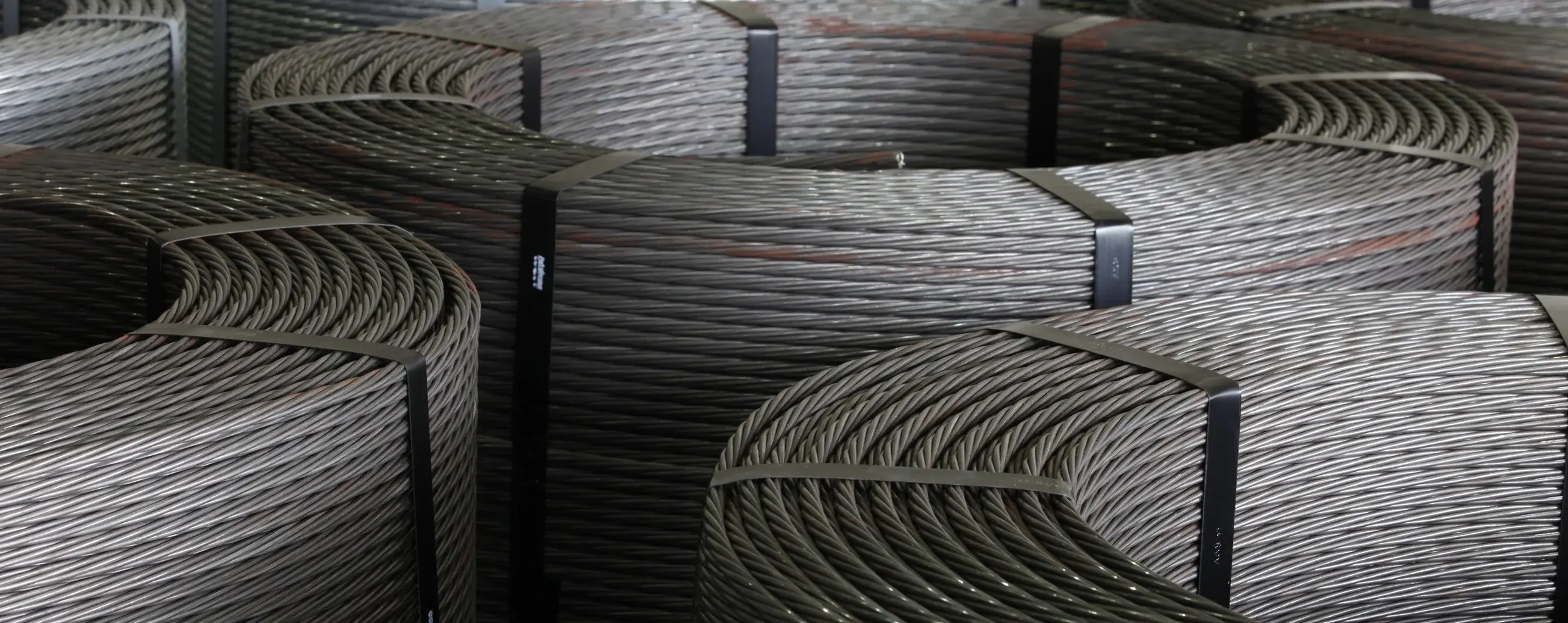
PC Strand is manufactured under tightly controlled conditions to achieve high strength, controlled elongation, and low relaxation characteristics. It is typically supplied in coils or reels and is used in both pre-tensioned and post-tensioned concrete systems across a wide range of structural applications.
How PC Strand Works in Prestressed Concrete
Concrete performs exceptionally well under compressive forces but has limited tensile capacity. PC Strand addresses this limitation by introducing compressive stresses into the concrete before service loads are applied. This prestressing action reduces tensile cracking, increases load-bearing efficiency, and enhances long-term durability.
In pre-tensioning systems, commonly used in precast concrete production, PC Strand is tensioned between fixed anchors prior to concrete placement. Once the concrete has achieved sufficient strength, the strand is released, transferring compressive force to the concrete through bond.
In post-tensioning systems, PC Strand is positioned within ducts cast into the concrete. After curing, the strand is tensioned using hydraulic jacks and secured with mechanical anchorages. This method is widely applied in bridges, slabs, and long-span structures where construction sequencing and structural flexibility are critical.
PC Strand Manufacturing Process
The manufacturing process of PC Strand is designed to ensure consistency, reliability, and compliance with international standards.

1. Wire Rod Selection
PC Strand production begins with high-carbon steel wire rod, typically containing 0.70–0.82% carbon. The wire rod must exhibit clean metallurgy with low impurity levels to ensure ductility, fatigue resistance, and uniform mechanical performance.
2. Surface Cleaning and Pickling
The wire rod surface is cleaned to remove mill scale and oxides using acid pickling. This is followed by water rinsing, neutralization, and application of a phosphate or lubricant coating. Proper surface preparation is essential to achieve smooth wire drawing and prevent surface defects.
3. Cold Wire Drawing
The cleaned wire rod is drawn through a sequence of tungsten carbide dies, progressively reducing its diameter. Cold drawing increases tensile strength through strain hardening while maintaining dimensional accuracy.
4. Stranding
Individual wires are assembled into the seven-wire configuration. One wire forms the core, while six outer wires are helically wrapped around it under controlled tension. Lay length and strand geometry are precisely controlled to meet standard requirements.
5. Stress Relieving
The stranded product passes through a stress-relief furnace under tension. This process reduces residual stresses, stabilizes elastic behavior, and limits long-term relaxation losses.
6. Inspection and Testing
Finished PC Strand undergoes comprehensive testing, including tensile strength, elongation, relaxation, dimensional checks, and surface inspection. Only compliant material is approved for shipment.
At Elsewedy Steel, steel manufacturing operations have been established since 2006, with PC Strand produced in accordance with internationally recognized prestressing standards. A complete range of grades and diameters is available to support diverse structural and design requirements. Leveraging Egypt’s strategic geographic location, Elsewedy Steel operates as a reliable export hub, enabling efficient logistics and competitive lead times across regional and international markets. For detailed technical data, standards compliance, and dimensional ranges, click here to learn more.
For sales enquiries or further information, click here to contact us. Our team can support product selection, applicable standards, sizing considerations, and logistics coordination for a wide range of prestressed concrete applications. For sales enquiry.