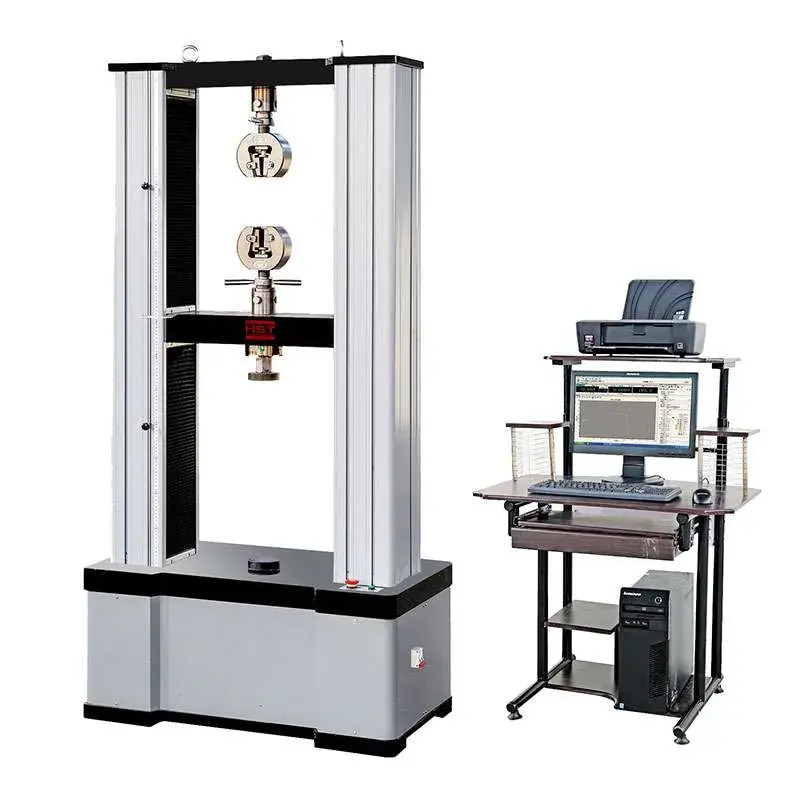
Tensile Strength Requirements for Steel Wire
- Introduction to Tensile Strength
Steel wire is a structural material designed to carry load efficiently under tension. Whether used in prestressed concrete, power transmission, reinforcement systems, or industrial applications, tensile strength is one of the most critical mechanical properties governing performance and safety. Understanding tensile strength requirements helps engineers select the correct steel wire grade, ensure compliance with standards, and maintain long-term structural reliability.
Tensile strength is the maximum stress a material can withstand while being stretched before failure. For steel wire products, it directly defines the load-carrying capacity and structural performance.
Why Tensile Strength Requirements Matter
Steel wires operate under demanding mechanical conditions. Tensile strength requirements are therefore defined by design standards to ensure predictable behavior.
Typical engineering functions influenced by tensile strength include:
-
Load transfer in prestressed concrete
-
Structural stability in cables and conductors
-
Resistance to dynamic and cyclic loads
-
Safety margins in reinforcement systems
In infrastructure applications such as bridges, towers, and precast concrete, the selected tensile grade must align with structural design assumptions. If tensile strength is too low, excessive deformation or failure may occur. If too high without proper ductility, brittle behavior may reduce safety.
-
Breaking Force
In engineering practice, tensile strength is typically expressed in:
-
MPa (megapascals) or N/mm²
-
Breaking load (kN or N) for specific wire diameters
Breaking force is the actual load a specific wire can carry before it breaks, and it depends on material tensile strength & cross-sectional area of the wire (diameter).
If the diameter increases, the breaking force increases — even if the tensile strength stays the same. For example, prestressed concrete strands rely on extremely high tensile strength materials, but the actual structural capacity depends on the strand’s total cross-sectional area.
This is why engineering specifications always define:
-
material grade
-
nominal diameter
-
minimum breaking load
The diagram illustrates the application of axial tensile load, resulting elongation, and progressive deformation of the specimen until fracture. The corresponding stress–strain curve shows the elastic region, yield point, strain hardening, ultimate tensile strength, and necking prior to failure.
-
Tensile Strength Requirements by Steel Wire Type
Different steel wire products are engineered for different load conditions. Their tensile strength requirements vary accordingly.
-
Prestressed Concrete Strands (PC Strands)
Prestressing strands are high-tensile steel products designed to induce compressive stress in concrete structures. They operate under sustained tension, making tensile strength a defining property. Prestressed strands are available in high strength grades such as:
-
1,725 N/mm² and 1,860 N/mm² tensile strength levels
-
Controlled elongation and relaxation performance
-
Defined breaking loads based on diameter
-
Prestressed Concrete Wires (PC Wires)
PC wires are designed for controlled load transfer in concrete elements such as pipes, sleepers, and precast slabs.
Typical tensile strength values include:
-
Up to 1860 MPa tensile class depending on diameter
-
Defined minimum elongation requirements (e.g., 3.5%)
-
Controlled relaxation behavior
These characteristics enable consistent load distribution and structural reliability in precast and prestressed systems.
-
Tire Bead Wire
Tire bead wire is a high-tensile steel product designed to maintain tire geometry under internal pressure and dynamic loading.
Unlike structural wires used in construction, bead wire must combine:
-
Very high tensile strength
-
Fatigue resistance
-
Strong adhesion to rubber
Typical tensile classes can exceed 1650–2350 N/mm², depending on wire diameter and application.
These requirements ensure dimensional stability of the tire, resistance to cyclic stress during rotation, and safety under pressure and impact loads. Tensile strength is therefore critical not only for load capacity but also for long-term durability in dynamic environments.
-
High Carbon Galvanized Steel Wires
Galvanized and high-carbon steel wires are widely used in mechanical and structural applications such as:
-
Overhead transmission cables
-
Structural support strands
-
Industrial mesh and fencing
-
General mechanical applications
High carbon galvanized steel wires may reach tensile strengths around 1,380–1,450 N/mm² depending on diameter and application requirements, according to technical product specifications.
Their tensile strength enables resistance to environmental loading such as wind, mechanical stress, and long-span tension.
-
Black High Carbon Steel Wire
Black high carbon steel wire is used in mechanical and industrial applications where strength, hardness, and fatigue resistance are required, such as springs and mattress wire.
Depending on diameter and processing, tensile strength may range approximately from:
-
950 MPa up to 1600 MPa or higher
These wires are engineered for:
-
Elastic performance
-
Wear resistance
-
Repeated loading cycles
In these applications, tensile strength is closely linked to hardness and fatigue performance.
-
References
-
STM A416/A416M - Standard Specification for Low-Relaxation, Seven-Wire Steel Strand for Prestressed Concrete.
-
ASTM A641 Standard for Quality Galvanized Wire Specifications and Applications.
-
ASTM E8 / E8M — Tensile testing.
-
BS 5896: High tensile steel wire and strand for prestressed concrete.
-
prEN 10138 — Prestressing steel.
-
BS EN 10244-2- Steel Wire and Wire Products.